子曰:“学而时习之,不亦说乎?有朋自远方来,不亦乐乎?人不知,而不愠,不亦君子乎?”
返回作者列表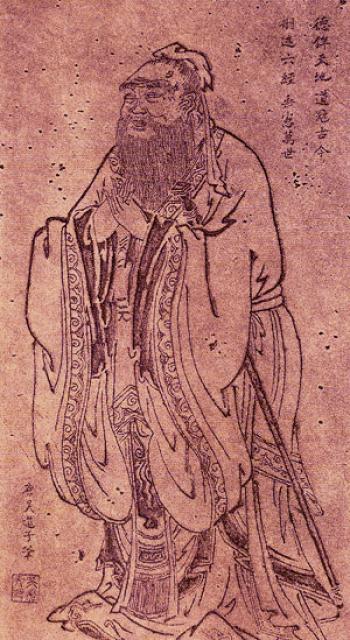
孔子 Confucius
孔子生于春秋末期鲁国,早年家境并不优渥,曾从事多种事务,后以讲学、从政和周游列国为人生主线。他主张以“仁”为核心,以“礼”为社会秩序的制度与伦理基础,晚年回鲁整理文献、教授弟子。其言行由弟子及再传弟子汇编为《论语》,成为理解儒家思想的关键文本。
代表作品
- 《论语》
- 《春秋》
- 《诗》《书》《礼》《乐》《易》等传统经典整理相关传述
功绩与影响
- 开创私人讲学风气,提出“有教无类”“因材施教”等教育理念。
- 奠定儒家思想基础,对中国和东亚政治伦理、教育传统与社会文化产生长期影响。
- 被后世尊为“至圣先师”“万世师表”。
收录名言 (32) Quotes
学而不思则罔,思而不学则殆。
Learning without thought is labor lost; thought without learning is perilous.
Perfect is the virtue which is according to the Mean! Rare have they long been among the people, who could practice it!
Among the appliances to transform the people, sound and appearances are but trivial influences.
子曰:“君子不重则不威,学则不固。主忠信,无友不如己者,过,则勿惮改。”
The superior man loves his soul; the inferior man loves his property.
The superior man has neither anxiety nor fear. When internal examination discovers nothing wrong, what is there to be anxious about, what is there to fear?
It is not truth that makes man great, but man that makes truth great.
有子曰:“礼之用,和为贵。先王之道,斯为美。小大由之,有所不行。知和而和,不以礼节之,亦不可行也。”
子曰:“弟子,入则孝,出则悌,谨而信,泛爱众而亲仁,行有余力,则以学文。”
If the people have no faith in their rulers, there is no standing for the state.
子曰:“父在,观其志。父没,观其行。三年无改于父之道,可谓孝矣。”
曾子曰:“慎终,追远,民德归厚矣。”
子曰:“道千乘之国,敬事而信,节用而爱人,使民以时。”
Follow the seasons of Ha, Ride in the state carriage of Yau, Wear the ceremonial cap of Chan, Let the music be the Shiu with its pantomimes.
It is characteristic of the most entire sincerity to be able to foreknow. When a nation or family is about to flourish, there are sure to be happy omens; and when it is about to perish, there are sure to be unlucky omens.
The man of virtue makes the difficulty to be overcome his first business, and success only a subsequent consideration.
Men all say, "We are wise"; but being driven forward and taken in a net, a trap, or a pitfall, they know not how to escape. Men all say, "We are wise"; but happening to choose the course of the Mean, they are not able to keep it for a round month.
Sincerity is the way of Heaven. The attainment of sincerity is the way of men. He who possesses sincerity is he who, without an effort, hits what is right, and apprehends, without the exercise of thought
子夏曰:“贤贤易色,事父母,能竭其力。事君,能致其身。与朋友交,言而有信。虽曰未学,吾必谓之学矣。”
曾子曰:“吾日三省吾身:为人谋而不忠乎?与朋友交而不信乎?传而不习乎?”
子贡曰:“贫而无谄,富而无骄。何如?”子曰:“可也。未若贫而乐,富而好礼者也。” 子贡曰:“诗云:如切如磋,如琢如磨。其斯之谓与?”子曰:“赐也,始可与言诗已矣。告诸往而知来者。”
知之者不如好之者,好之者不如乐之者。
Those who know it are not as good as those who love it; those who love it are not as good as those who delight in it.
The superior man examines his heart, that there may be nothing wrong there, and that he may have no cause for dissatisfaction with himself. That wherein the superior man cannot be equaled is simply this